
Tread Mill Test (TMT)
Tread Mill Test (TMT) – Also Called Exercise Stress Test
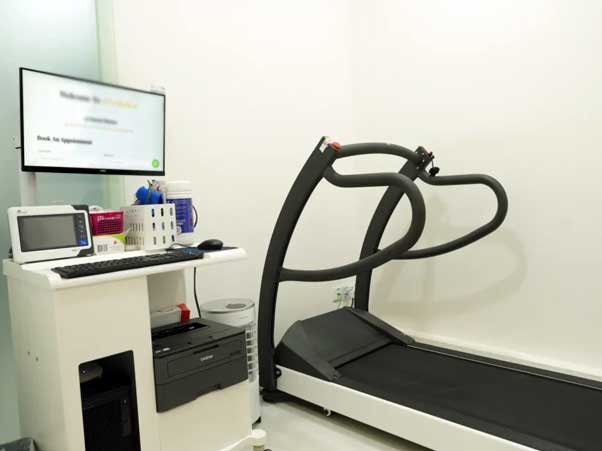
A Treadmill Test (TMT), also known as an exercise stress test (ETT), evaluates how well your heart performs under physical stress. You’ll walk on a treadmill while connected to a continuous ECG and computer console that monitors your heart’s electrical activity during exercise.
This test helps assess your functional capacity, identify potential coronary artery disease (CAD), evaluate risk for heart attacks, and monitor the effectiveness of treatments.
Exercise Physiology – What Happens When You Exercise?
Exercise triggers sympathetic stimulation and coronary artery dilation to increase blood flow. This response helps meet your heart muscle’s oxygen demands. If a coronary artery is narrowed by more than 50%, the vessel won’t dilate effectively, reducing oxygen supply to the heart and potentially triggering symptoms.
What Is the Purpose of TMT?
The TMT helps determine how efficiently the heart receives oxygen and responds to physical stress. It aids in diagnosing:
- Coronary artery disease (CAD)
- Heart rhythm abnormalities
- Exercise tolerance and safe activity levels
What to Expect During the TMT?
Preparation and procedure guidelines include:
- Men with chest hair may be asked to shave to ensure electrode contact
- A gown will be provided to ensure modesty
- Female technicians will monitor tests for women patients
- Avoid eating or drinking caffeine a few hours before the test
- Avoid smoking or using tobacco products
- Stop taking certain medications as instructed
- Wear comfortable clothes and sturdy shoes
Treadmill tests are generally safe, but in rare cases, symptoms like chest pain or dizziness may occur. Always inform us if you are pregnant, breastfeeding, or use an inhaler.

When Will I Get the Result?
Test results are printed immediately. Based on your ECG and exercise performance, your result will be classified as:
- Positive (Abnormal): Suggests reduced blood flow to the heart muscles
- Negative (Normal): Indicates good heart response to exercise
- Inconclusive: Further tests may be needed
What If My TMT Is Positive?
A positive TMT suggests a possible significant narrowing in one or more coronary arteries. Depending on the severity and clinical symptoms, the next steps might include:
- Invasive Coronary Angiogram (preferred if suspicion is high)
- CT-Coronary Angiogram (in select cases)
- Follow-up treatment such as Coronary Angioplasty or Stent Insertion
If required, invasive angiograms are done as a simple daycare procedure at East Point Hospital with minimal risk.