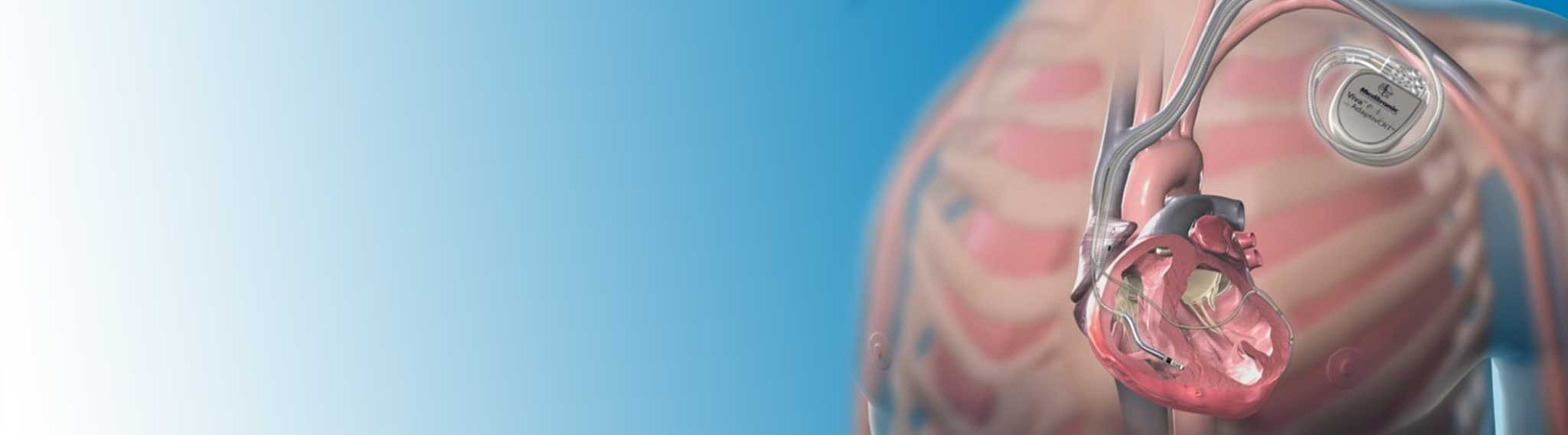
Implantable Defibrillators (ICD)
Automated Implantable Cardioverter-Defibrillator (AICD)
An Automated Implantable Cardioverter-Defibrillator (AICD or ICD) is a device designed to detect and correct life-threatening heart rhythms such as Ventricular Tachycardia (VT) or Ventricular Fibrillation (VF). When it detects an abnormal rhythm, the device either delivers fast pacing impulses (Anti-Tachycardia Pacing, ATP) or, if needed, an electric shock (defibrillation) to restore normal heart rhythm.
Description
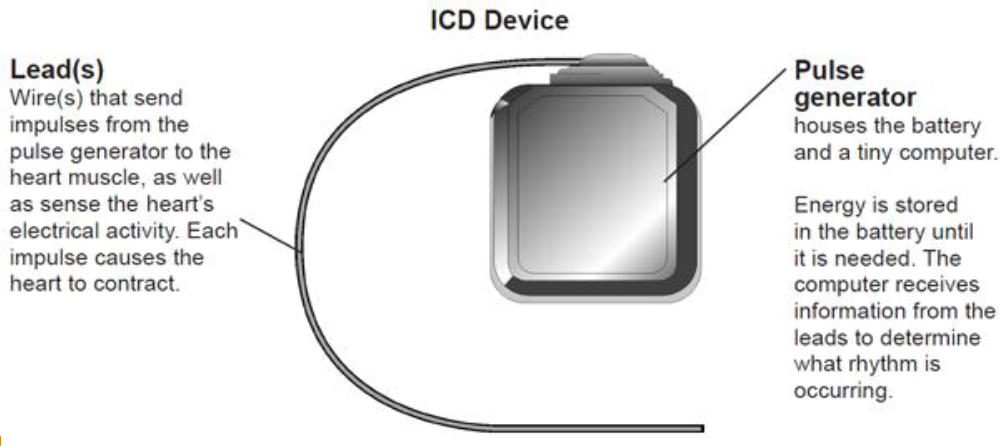
An ICD consists of:
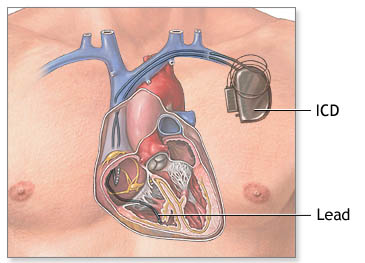
- Pulse Generator: About the size of a large pocket watch, it contains the battery and circuitry to monitor and correct heart rhythms.
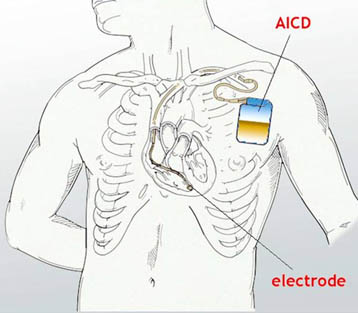
- Electrodes (Leads): Wires that pass through veins into the heart to deliver therapy. The ICD may have 1, 2, or 3 leads.
- Pacemaker Function: All ICDs have built-in pacemakers for treating slow or irregular rhythms or post-shock stabilization.
Implant Procedure
The implantation is a straightforward procedure performed under local anesthesia with sedation. After numbing the chest area, a small incision is made to create a pocket for the generator. Leads are guided through veins into the heart and secured with x-ray guidance. The procedure usually takes 1 to 3 hours depending on the type (single, dual, or Bi-Ventricular).
Purpose and Benefits
The primary purpose of an AICD is to prevent sudden cardiac death by detecting and correcting dangerous arrhythmias. It does not offer immediate symptom relief but provides long-term protection and peace of mind—akin to a life-saving insurance policy.
When CRT and AICD Are Combined (CRT-D)
Some patients with heart failure and electrical conduction issues (such as LBBB) benefit from a combined device called a CRT-D, which includes both CRT and ICD functionalities. The CRT component improves the coordination of heartbeats, enhancing heart efficiency and relieving symptoms, while the ICD component protects against dangerous arrhythmias.
Subcutaneous ICD (S-ICD)
The S-ICD is a newer alternative where the device and lead are implanted entirely under the skin without touching the heart or blood vessels. This option is ideal for young patients at risk for fast, life-threatening rhythms who do not require pacing therapy.
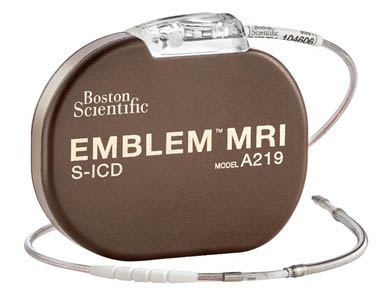
During this procedure:
- A pocket is created below the armpit for the generator (slightly larger than a standard ICD).
- The lead is tunneled under the skin and placed over the chest to cover the heart area.
- The lead is sutured securely to the muscle and connected to the generator.
This method avoids venous puncture and is a safe, effective option for specific patient groups.