Cardiac Re-Synchronisation Therapy (CRT)
Cardiac Resynchronization Therapy (CRT)
If you are diagnosed with heart failure with reduced ejection fraction (a weak heart), it's important to examine your ECG for a condition called Left Bundle Branch Block (LBBB). When both heart failure and LBBB are present, you may benefit significantly from Cardiac Resynchronization Therapy (CRT).
What Is CRT and How Can It Help?
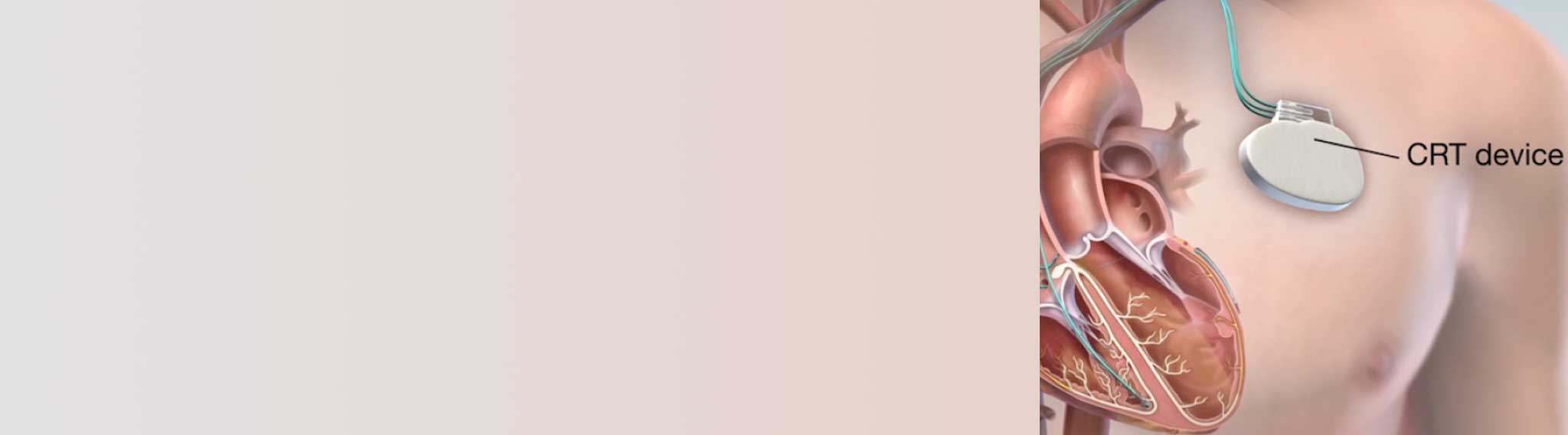
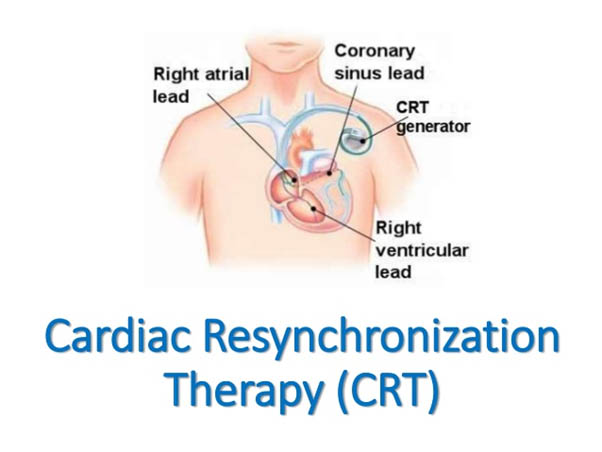
LBBB and heart failure often occur together. LBBB disrupts the heart’s electrical coordination, causing it to beat inefficiently. CRT involves implanting a special pacemaker (a Bi-Ventricular Pacemaker) with three leads that help re-synchronize the heart’s electrical impulses. Over time, this improves the heart’s mechanical function and pumping efficiency.
How Is CRT Performed?
CRT involves implanting a pacemaker about the size of three ten-rupee coins just below the collarbone. Three wires (leads) are connected to the device and placed inside the heart to detect and regulate the heart’s rhythm using precisely timed electrical pulses.
Benefits of CRT
CRT improves heart efficiency and blood flow. Benefits include:
- Relief from heart failure symptoms such as shortness of breath
- Improved exercise tolerance and energy levels
- Reduced hospitalizations
- Better quality of life and potentially longer lifespan
Who Is a Candidate for CRT?
CRT is typically recommended for patients who:
- Have moderate to severe heart failure symptoms
- Have reduced ejection fraction (weak pumping function)
- Show LBBB on an ECG, indicating desynchronized chamber contractions
CRT is generally **not suitable** for patients with:
- Mild heart failure symptoms
- Preserved ejection fraction (heart is stiff but not weak)
- Normal coordination between heart chambers
- Unoptimized medication therapies
CRT has been shown to be effective for both men and women equally.
To Learn More
I routinely assess all heart failure patients for CRT suitability. If I believe you may benefit from this therapy, we will have a detailed discussion. You are also encouraged to raise this topic during your consultation so I can consider your full medical history, age, and preferences.
CRT may also be combined with an automated implantable cardioverter-defibrillator (AICD) for added protection from life-threatening arrhythmias. This combination device is called a CRT-D.