Pacemakers
What Is a Pacemaker?
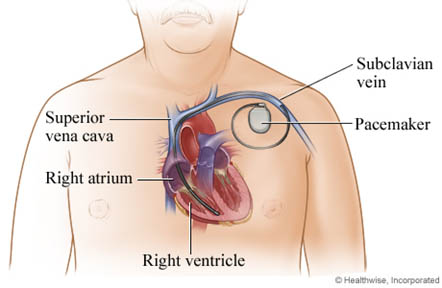
A pacemaker is a small device implanted in the chest (or abdomen for children) to treat bradycardia—a condition where the heart beats too slowly. It sends electrical pulses to help the heart beat at a regular rate, preventing symptoms like fatigue, fainting, or even organ damage in severe cases.
How the Heart’s Electrical System Works
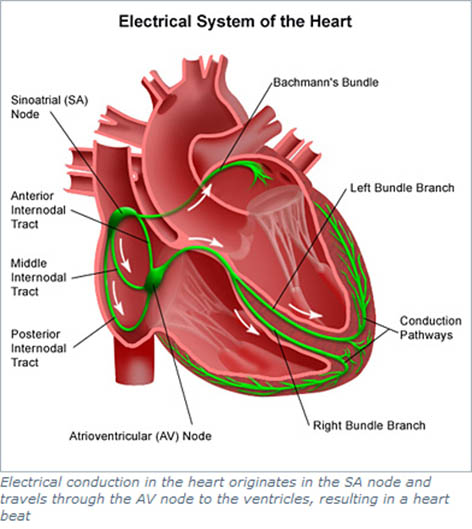
The heart has a built-in electrical system that controls your heartbeat. Signals start at the SA node and move through the heart to make the chambers contract in rhythm. Disruptions in this signal can cause abnormal heart rhythms.
How a Pacemaker Helps
Pacemakers use low-energy pulses to:
- Speed up slow heart rhythms
- Regulate rhythms when using medications
- Assist in conditions like atrial fibrillation and heart failure (via CRT devices)
- Prevent life-threatening arrhythmias (e.g., Long QT syndrome)
Types of Pacemakers
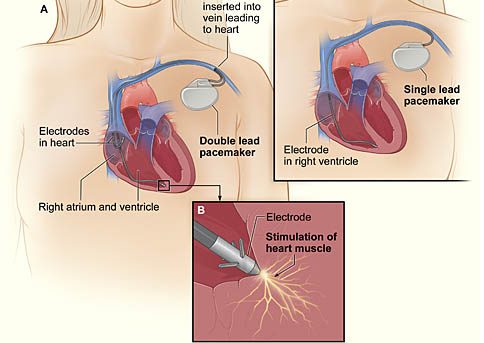
- Single-chamber: Sends signals to one heart chamber.
- Dual-chamber: Coordinates upper and lower chamber activity.
- Biventricular (CRT): Helps both lower chambers beat in sync (used in heart failure).
Who Needs a Pacemaker?
- Bradycardia or heart block
- Sick sinus syndrome
- Regulating heartbeats after AV node ablation
- Side effects from heart meds
- Fainting due to heart rhythm issues
- Heart failure or congenital heart conditions
Tests Before a Pacemaker
- ECG
- Holter/Event monitors
- Echocardiogram
- Electrophysiological Study (EPS) (rarely)
Pacemaker Surgery
Done under local anesthesia with sedation. Wires are placed through a vein and connected to a generator placed under the skin. Usually takes 1–2 hours.
Risks include swelling, infection, bleeding, or rarely, lung collapse or nerve damage.
Life with a Pacemaker
- Avoid close contact with strong magnets or electrical devices.
- Keep devices like phones and MP3 players away from the implant site.
- Inform security and medical personnel about your pacemaker.
- Exercise is generally safe, but avoid contact sports.
- Regular checkups are needed every 3–6 months.
- Battery lasts 7–15 years and can be replaced with minor surgery.
Advanced Devices
- AICD: Combines a pacemaker with a defibrillator to treat dangerously fast heart rhythms.
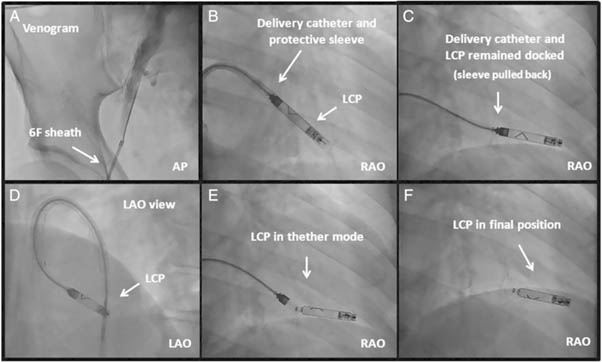
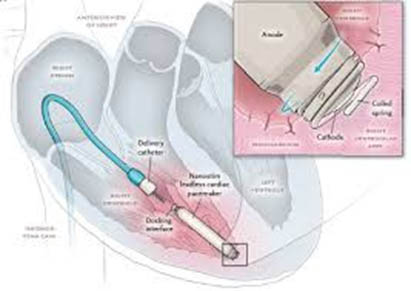
- Leadless Pacemakers: A new, miniaturized option inserted through the leg vein—ideal for some patients needing single-chamber pacing.